
To further enhance the professional competence of the team, standardize and streamline the operation of international logistics businesses, and support the improvement and upgrading of the company’s cross-border logistics services, the company recently organized a special training session on international logistics and transportation knowledge. Managers and key business staff from all centers and departments gathered together for immersive learning and interactive exchanges to jointly consolidate fundamental professional capabilities.
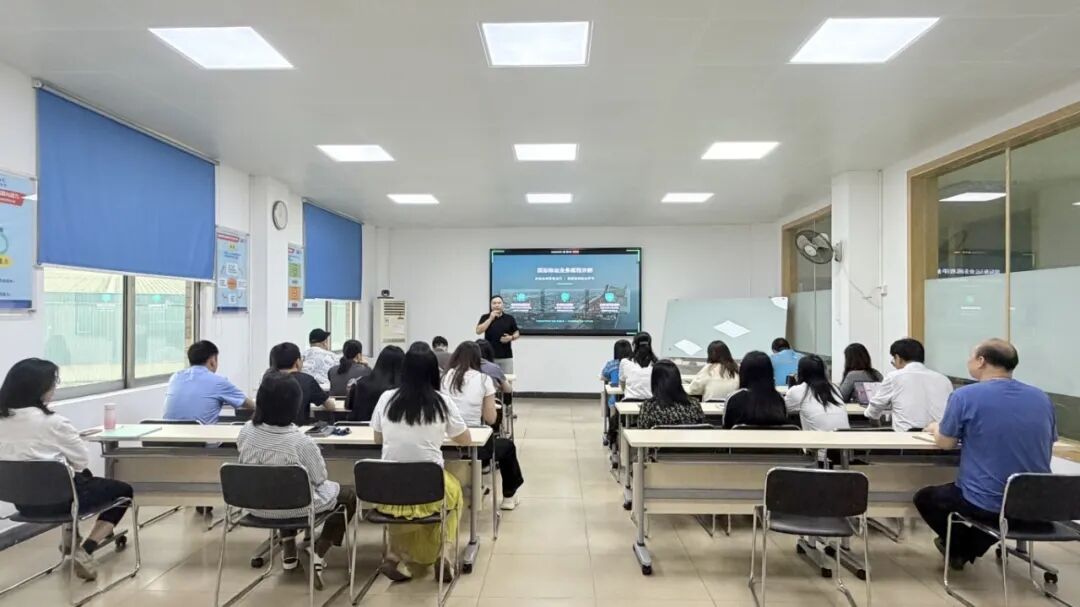
This training was delivered by Zheng Jie from the Integrated Transportation Center. Closely aligned with the company’s existing international ocean shipping business scenarios, the training avoided tedious theoretical lectures and focused on four core modules: practical operation procedures, key documents, high-frequency terminology and risk prevention & control. The explanations were detailed and easy to understand, with work-relevant case studies, delivering high practical value.
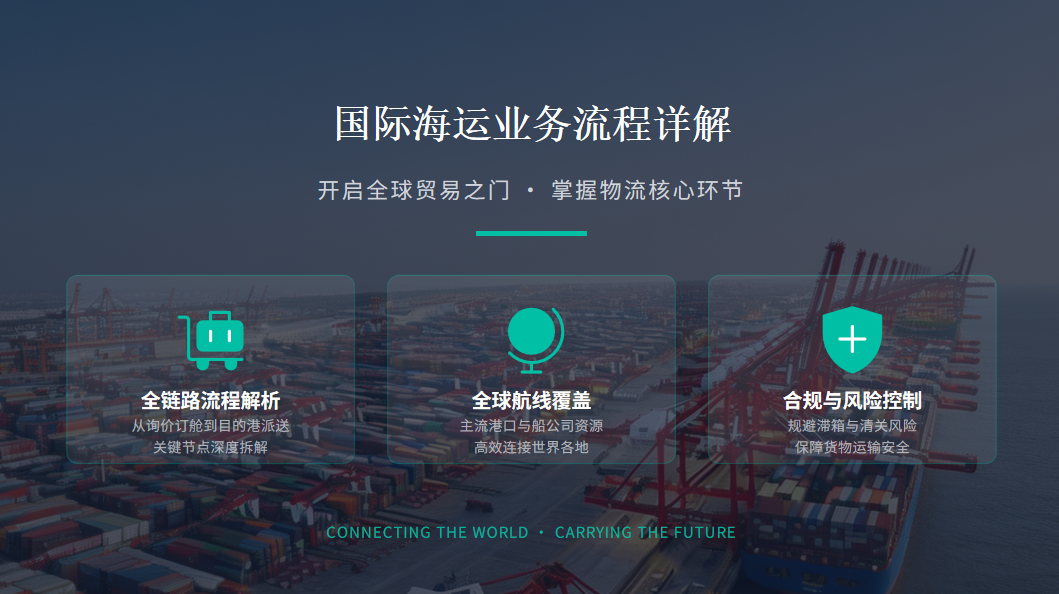
Clarify the entire workflow for streamlined operations.
Centered on the full journey “from enquiry to delivery”, the training thoroughly unpacked the closed-loop end-to-end operation of international ocean freight. It broke down every critical milestone: starting from initial client enquiries, information verification and booking instructions, followed by formal space booking, receipt of the Shipping Order (S/O), trucking arrangement for container pickup at factories, container inspection, standard stuffing, export customs declaration and verification of shipping instructions (SI) for bill of lading; and continuing with ocean transit tracking, import customs clearance and duty payment at the destination port, as well as last-mile delivery and proof of receipt.
Drawing on hands-on operational experience, the speaker elaborated on schedule control for each phase, inter-department coordination and operational precautions. Participants gained a clear overview of the overall logic, workflow sequence and division of responsibilities for international ocean freight operations. They can now grasp the full process in mind and conduct operations with confidence.
Master Document Terminology to Build Solid Professional Expertise
The training focused on core documents and terminology widely used in daily international logistics operations, including S/O (Shipping Order), B/L (Bill of Lading), HS Codes, FCL (Full Container Load) and LCL (Less than Container Load). It clarified specifications for document completion, key points for information verification and submission deadlines, and highlighted the fundamental principle of consistency between all documents and between documents and goods, so as to reduce errors and risks at the source.
In addition, frequently used trade terms such as FOB, CIF, CFR, EXW and DDP were explained in an accessible, work-related manner. The trainer clearly defined the scope of responsibilities, cost liabilities and risk transfer points for buyers and sellers, enabling participants to quickly comprehend and accurately apply these rules. This helps improve their proficiency in professional communication and business coordination.
Focus on risk points to ensure secure transportation.
Drawing on the company’s real business cases, the training delivered in-depth analysis of common pitfalls encountered in daily operations. Typical high-frequency risks were covered, including roll-over cargo caused by delays against customs cut-off and SI cut-off deadlines, obstacles to cargo collection at destination stemming from erroneous bill of lading information, cargo damage resulting from non-standard packaging and container stuffing, extra charges arising from demurrage and detention at destination ports, as well as customs inspection and detention due to incomplete clearance documents.
The speaker shared preventive measures, handling tactics and standardized workflows for each scenario, encouraging participants to establish end-to-end risk management awareness. Teams are guided to conduct advance risk assessment, maintain ongoing tracking during transit, and implement closed-loop follow-up after incidents, ensuring every shipment arrives safely, smoothly and on schedule for customers.
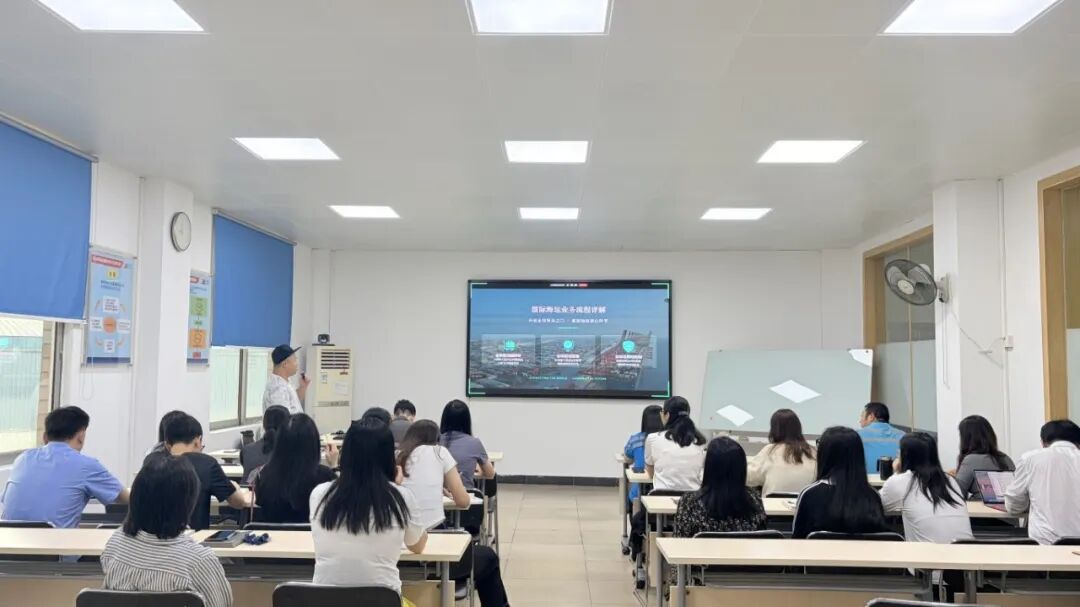
During the training, participants listened attentively, raised questions proactively and engaged in active discussions. They held in-depth exchanges with the speaker regarding doubts and difficulties encountered in daily work. The session maintained a relaxed yet vibrant learning atmosphere, enabling attendees to come with questions and leave with solutions.
This training has further lifted the team’s knowledge of international logistics, improved practical operational skills and risk prevention capabilities, laying a solid foundation for more standardized, efficient and stable development of the company’s cross-border logistics business.

Address:No. 99, Fuda Road, Hongshan Subdistrict, Huangpu District, Guangzhou, Guangdong, China
- Core Business
- Warehousing
- Transportation
- Global Logistics
- Packing Services
- DG Services
- Industry Solutions
- Electrical appliance
- Automotive
- Supply chain
- Cable
- FMCG
- Strategic Clients
- Service Center
- Business Consultation
- Careers