
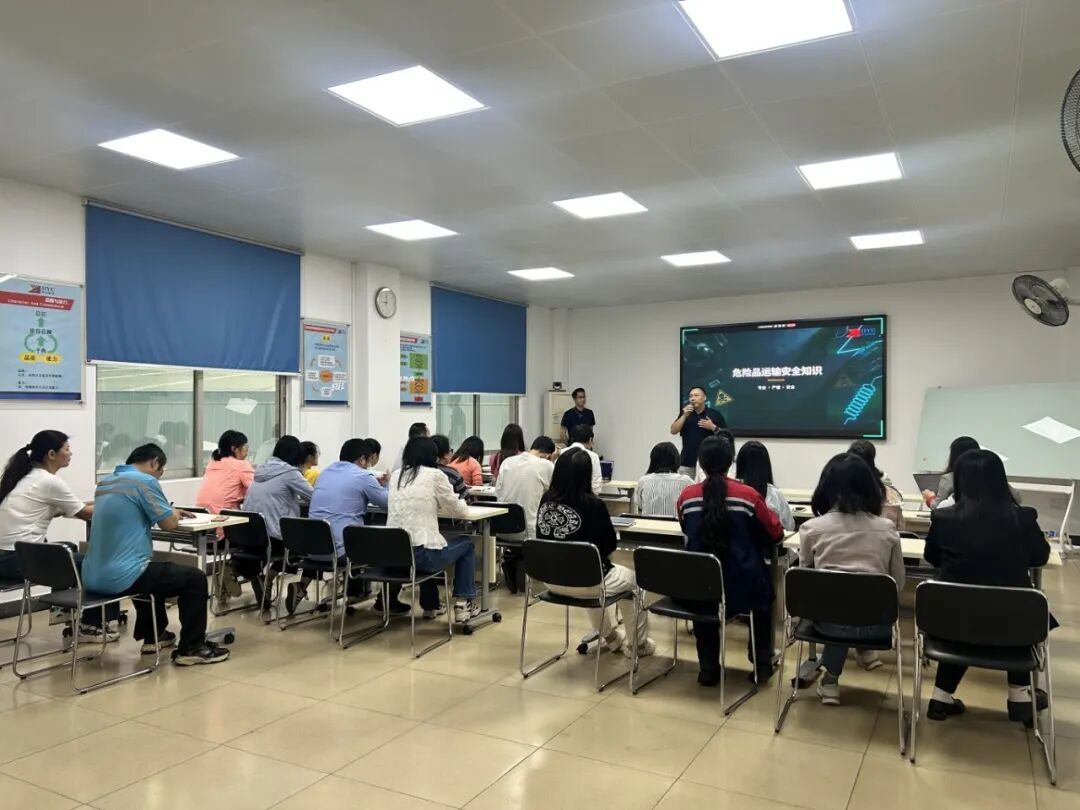
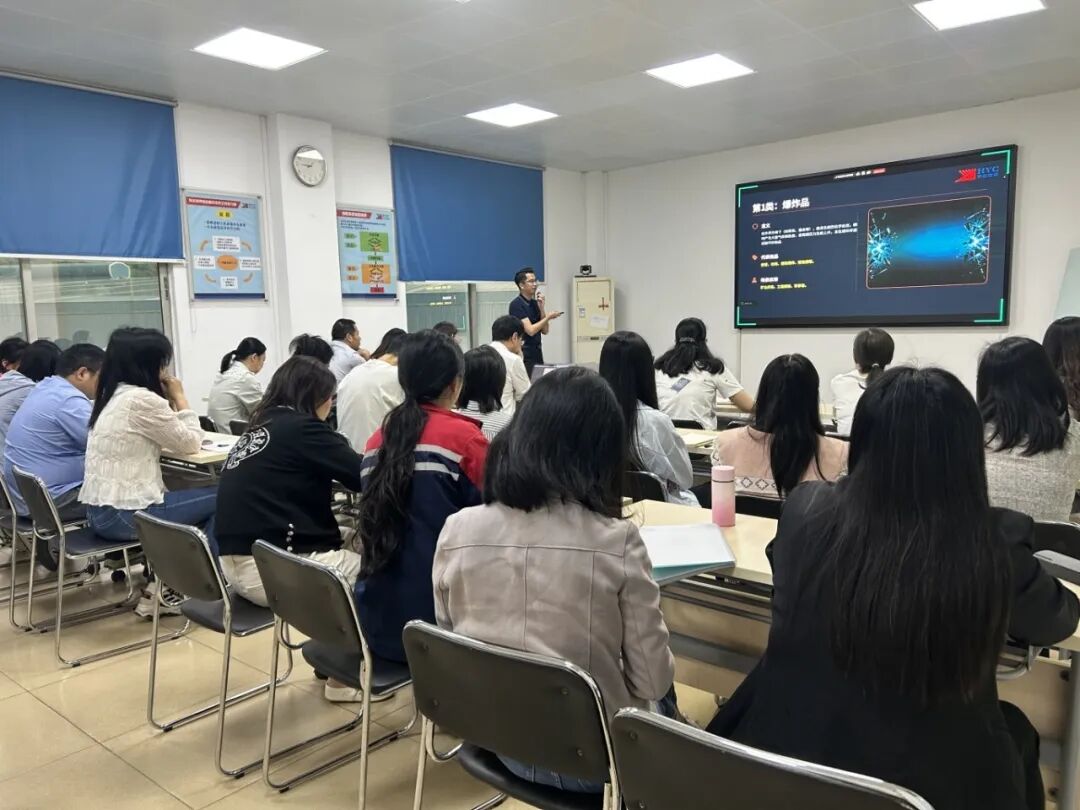
To further strengthen the safety management of hazardous chemicals transportation, enhance the professional competence and risk prevention capabilities of management personnel, and ensure the safe, efficient, and compliant operation of the company's business, a special training session on hazardous chemicals transport safety knowledge was organized on April 24, 2026. Operations management personnel from all centers and departments attended the training together for shared learning.
The training was delivered by Liu Yongqing from the Resource Procurement Center. It focused on four core modules: classification and identification of dangerous goods, full-process transport control, typical accident case studies, and emergency response protocols. The content was closely aligned with the company's actual operational scenarios, providing detailed and highly practical knowledge.
Identify and Distinguish Risks – Strengthening Safety Awareness
The training provided a systematic overview of the definition, hazardous properties, complexity, and vulnerability characteristics of hazardous chemicals. It gave a detailed interpretation of the nine major classes of dangerous goods – namely Explosives, Gases, Flammable Liquids, Flammable Solids, Oxidizing Substances, Toxic Substances, Radioactive Materials, Corrosive Substances, and Miscellaneous Dangerous Substances – covering their definitions, representative items, and associated safety risks. This helped participants accurately identify the "hidden killers" in their operations and solidify their foundational safety knowledge.
Full-Process Control – Strict Adherence to Operating Procedures.
The trainer, drawing on the company's operational standards, highlighted the key risk control points throughout the full-process transport of hazardous chemicals:
Pre-Transport:
Rigorous vetting of personnel and vehicle qualifications, closed-loop management of electronic consignment notes, verification of packaging markings, route planning, and emergency preparedness.
In-Transit:
Compliance with speed limits, prohibition of fatigued driving, scheduled en-route vehicle inspections, and implementation of 24/7 GPS dynamic monitoring.
Post-Transport:
Standardized unloading and acceptance procedures, closed-loop signing and filing of documents, and management of hazardous waste transfer manifests.
The training also clearly defined mandatory regulatory requirements, including licensed operations, strict prohibition of overloading and mixed loading, compliance with designated routes, and timely incident reporting, thereby reinforcing awareness of compliant operations.
Case Studies as a Mirror – Boosting Emergency Preparedness.
01 Learning from Cases – Keeping the Alarm Bell Ringing at All Times
The training incorporated typical accident cases, including the Tianjin Port "8·12" explosion accident and the hazardous chemicals leak on the Yongguan Expressway, to conduct an in-depth analysis of the accident causes and the devastating lessons learned. This guided all personnel to discard any fluke mindset and embed the "safety first" principle into every operational step.
02 Standardized Emergency Response – Enhancing Disposal Capabilities
Focusing on emergency scenarios, the trainer elaborated on the five-step emergency response principles: immediate alarm, cordoning off the area, evacuation of personnel, initial containment, and coordinated support with rescue teams. Practical skills were also covered, including how to consult Material Safety Data Sheets (MSDS), handle spills, and use personal protective equipment (PPE), ensuring that in the event of an emergency, personnel can respond swiftly, take scientifically sound actions, and minimize risks to the greatest extent possible.
Participants remained fully engaged throughout the training, taking detailed notes and actively exchanging experiences in safety management. This further enhanced their core competencies in risk identification, standardized operations, and emergency response.
This training has further consolidated the company's foundation for safe management of hazardous chemicals transportation, while strengthening safety awareness and professional skills across all personnel. Going forward, the company will continue to conduct regular safety training and hazard identification and remediation efforts, adhering to the principles of prevention first, combining prevention with control, shared responsibility, and life above all. With a professional, rigorous, and safety-first standard, we are committed to safeguarding every shipment and providing our customers with more reliable and trustworthy logistics services.

Address:No. 99, Fuda Road, Hongshan Subdistrict, Huangpu District, Guangzhou, Guangdong, China
- Core Business
- Warehousing
- Transportation
- Global Logistics
- Packing Services
- DG Services
- Industry Solutions
- Electrical appliance
- Automotive
- Supply chain
- Cable
- FMCG
- Strategic Clients
- Service Center
- Business Consultation
- Careers